How to convert ICAO to EASA
How to convert ICAO, FAA or UK CAA to EASA
The process how to convert an ICAO or FAA or UK CAA pilot licence to EASA will depend on the type of license(s) held (PPL or CPL or ATPL), the license you are trying to obtain (PPL or CPL or ATPL), and the hours or types of aircraft you have experience on, and the guidelines are set out in Article 8 of, as well as Annex III section B to EASA flight crew regulation Part-FCL of Commission Regulation (EU) No 1178/2011 of 25 November 2011.
For ICAO PPL to EASA PPL, the process is identically the same for both fixed-wing aeroplanes and rotary helicopters
Here, we summarize each license conversion on a case by case basis: -
- FAA PPL to EASA PPL
- EASA PPL to UK CAA PPL
And
- ICAO / UK CAA PPL to EASA PPL
- ICAO / UK CAA / FAA PPL to EASA f-ATPL
- ICAO / UK CAA / FAA CPL to EASA f-ATPL
- ICAO / UK CAA / FAA ATPL to EASA ATPL
FAA PPL to EASA PPL
Note, FAA to EASA has different eligibility requirements (than ICAO and UK CAA to EASA) due to the FAA-EASA bilateral TIPL agreement that reflects mutual confidence in one another's licencing procedures. To summarise some of the key notable differences, to convert FAA to EASA, an applicant who holds a valid FAA pilot certificate (aeroplane) and wishes to apply for a Part-FCL PPL(A) must meet the eligibility requirements: -
Eligibility Requirements
- Must reside in an EU Member State
- Must present a pilot log book
- Do NOT need to sit any PPL examinations
- No English Language Proficiency (ELP) test required providing the FAA pilot certificate is endorsed 'English proficient' which is deemed to be equal to ICAO/EASA ELP level 4 (operationally proficient). If ELP Level 5 or 6 is wanted, an EASA ELP test is required.
- No ground school required, if applying for a PPL with SEP(land) class rating
- No flying hour minimums required, unless seeking a Night rating endorsement
- SEP(land) class rating must be current i.e. must have been issued within the last 24 months
- Valid class 1 or 2 medical certificates (Both EASA and FAA must be current)
- With an EASA Part-FCL flight examiner FE(A) who has privileges to conduct skill tests for the issue of the PPL(A):
- Demonstrate an adequate level of theoretical knowledge of ‘Air Law & ATC Procedures’ and ‘Communication’ at the private pilot level. The questions should come from the European Central Question Bank (ECQB). Read page 29-30 in the FAA TIP-L agreement
- Pass the skill test (in accordance with FCL.235 and FCL.725 and the relevant Appendix)
Details about how to obtain a Verification of an FAA Airman Certificate can be read here
Also note, if you choose Austria as your country of licence issue, Austro-Control's application form to convert FAA to EASA is different, but can be downloaded here: Conversion of FAA FCL according to TIP-L between FAA and EASA.
Watch this video, how to convert EASA to FAA
EASA PPL to UK CAA PPL
The conversion process how to convert EASA to UK CAA is identically the same as UK CAA to EASA in reverse, with obviously the same two (2) examinations being needed to be completed with the UK CAA examination licencing authority, and the skill test with a UK CAA examiner in a G-registered aircraft.
Important message for British pilots, Post-BREXIT
** Fly EPT Spain will facilitate British ab-initio student pilots into a dual UK-EASA commercial pilot licence training programme **
Follow Fly EPT Spain's CPL Preparation Programme ✈︎ Graduates can be transferred to an approved Ryanair Future Flying Academy
Check: BREXIT ✈︎ Flight Training
ICAO or UK CAA PPL to EASA PPL
If you hold an ICAO-compliant Private Pilot Licence (PPL) issued outside Europe by a third country, you can convert it to a European EASA licence, and the conversion process is a simple formality, meaning 'no further training is required'.
Eligibility criteria
You will need to:
- have 100 hours as a pilot in the relevant aircraft category
- Pass two (2) EASA PPL theoretical exams (no ground school required) in AIR LAW and HUMAN PERFORMANCE & LIMITATIONS
- Pass an EASA English Language Proficiency (ELP) test for issue of your Radio-Telephony operator's licence OR have demonstrated sufficient language proficiency in the language to be used for radio communication
- Pass an EASA Class two (2) Medical examination and hold a valid class 1 or 2 medical certificate
- Pass a PPL skill test with an EASA Flight Examiner
So if you have less than 100 hours of flight time and you wish to convert your ICAO / FAA / UK CAA Private Pilot License (PPL) to EASA, you will need to complete the full approved EASA PPL course and 45 hours flight training. Even if you already have a PPL.
Any hours flown, however, can be credited towards the 200 hours experience required for CPL issue.
If you have more than 100 hours of flying time as a pilot in the relevant aircraft category, you can convert your ICAO / FAA / UK CAA Private Pilot License (PPL) to EASA. You are given a few exemptions at the discretion of the local authority, but you are still required to comply with the above listed requirements i.e. the eligibility criteria.
Licence conversion ICAO to EASA - Step by step process
While this step-by-step format is generally tailored for PPL with an SEP (land) class rating, the process is the same for ATPL conversion with a type rating licence endorsement
(1)
Apply for a Licence Verification Letter from your ICAO / FAA / UK CAA licencing authority
First, apply for a licence verification letter. Do note, the process is slightly different for ICAO and FAA.
For ICAO, apply to your ICAO Civil Aviation Authority’s (CAA) Flight Crew Licensing department for a ‘Licence Verification Letter’. This can take 1 day or 1 month, depending on your State of Licence Issue (SOLI). To expedite the process, send an email today and follow up your request with a phone call.
For FAA, licence holders who require a verification letter of their FAA airman certificate, for a Foreign Civil Aviation Authority, the request must come directly from the Foreign Civil Aviation Authority themselves to the FAA. The FAA will only reply to the official email address of the Foreign Civil Aviation Authority. For further details, read here on the FAA website.
(2)
Apply to Austro-Control - Ask for permission to start the conversion process
Second, request for written permission from Austro-Control to start the ICAO to EASA licence conversion application process.
Here is a template email you can copy and paste. Adapt the words to suit your own personal circumstances
In your email to Austro-Control, state you have:
- a Valid (* state country) PPL(A)
- a Valid and current SEP class rating
- More than 100+ hours total flight time on the relevant aircraft category
Note: your licence and SEP(land) class rating must be current
Attach to your email copies of:
- Austro Control (Conversion) application form
- Passport copy
- Valid ICAO / UK CAA PPL licence copy
- Current SEP(land) class rating
- All log book pages showing a chronological and accumulative log of your 100+ hours total flight time, in the relevant aircraft category
- Class 2 Medical Certificate
- “Licence Verification Letter” from your ICAO State of Licence Issue (SOLI)
To apply to sit the two (2) EASA PPL exams in AIR LAW and HUMAN PERFORMANCE & LIMITATIONS with Austro-Control GmbH, fill in the correct form, which can be downloaded from here:
To convert to a PPL(A): Conversion to a Part-FCL PPL(A)
To convert to an ATPL: ATPL(A) - Conversion
- Download the latest Austro-Control application form to apply to sit the PPL exams
- Digitally fill in Parts 1 and 2 only, with your personal details. Note: Handwritten forms will NOT be accepted by Austro-Control
- Print the form and sign Part 2 (digitally or by hand)
- Scan and send the completed form to: examinations@austrocontrol.at and CC: piloten@austrocontrol.at along with all the documents listed above
- You MUST send this application form to Austro-Control at least 21 days before the examination date
- Once you receive written permission from Austro-Control to proceed with the conversion process, forward your Austro-Control approval email to: Info@flyEPTspain.com and let us know where and when you would like to sit the EASA exams
- Fly EPT Spain will arrange for our ATO ground school Head of Training (HT) to counter-sign and stamp your application form
- The ATO ground school coordinator will send you a confirmation email to confirm your examination date booking
- You are now all set to sit the PPL exams. On the exam day, remember to take the original stamped and signed form with you; it must be presented to the invigilator on the day of the examination
Very Important Note: Before sitting the PPL exams, please make sure your licence and SEP(land) class rating is current. On the day of the exams, the invigilator will check your licence and if your Single Engine Piston (SEP) class rating is NOT current, you will NOT be allowed to sit the exams. So, check your ICAO licence now and make sure your SEP(land) class rating has NOT lapsed before the exam date.
(3)
Study for AIR LAW and HUMAN PERFORMANCE & LIMITATIONS
Note: FAA licence holders do NOT need to sit these PPL exams
If you meet the minimum eligibility requirements and you have Austro-Control written approval to sit the exams, you now need to study for the EASA PPL examinations in:
- AIR LAW
- HUMAN PERFORMANCE and LIMITATIONS
ICAO PPL licence holders converting to EASA PPL do NOT need to enroll into an approved ground course. You can go straight to the exams.
Before the exams, however, you first need to read the questions and answers for the two (2) subjects. We can provide you with online access to the latest European Central Question Bank (ECQB) so you can study the most up to date database of Q&A's from home.
If you need online access to the ECQB, contact us
(4)
Take an ICAO English Language Proficiency (ELP) test
ICAO licence holders need to take an EASA approved English Language Proficiency (ELP) Test as the endorsement is required in order to issue the Flight Crew Radio-Telephony (RT) Licence
If you are a native English speaker, you are still required to take an ELP test. If you score a Level 6 (fluent), the result has lifetime validity.
For those applying for an EASA licence on the back of a UK CAA or ICAO licence that already has an ELP level 4, 5 or 6 endorsement, and are wondering whether the ELP result can be carried over onto their new EASA licence. Unfortunately the answer is 'No', because the ICAO licence and its endorsements are not considered EASA-approved. The EASA ELP test is therefore a mandatory requirement for all, with no exceptions even to native-English speakers
We can arrange for you to complete an EASA approved ELP test with an external Language Assessment Body, and you can do this online over ZOOM using a web camera so you can remain at home.
If you want to schedule an ELP test, contact us
Form 096: Austro Control GmbH form: Application for a language proficiency endorsement is required to be sent to your chosen licencing authority, together with all the other documents. (Electronically fill in your details as handwritten form are NOT accepted.)
(5)
Class 2 Medical Examination
You will need to undertake a Class 2 (or 1, as required) Medical examination, and this must be done by an EASA-approved Aero-Medical Examiner (AME) registered with the same EASA-country State of Licence Issue (SOLI) that you plan to apply too for the issue of your new EASA licence.
You can search for an EASA-approved Aero-Medical Examiner (AME) in the UK here, and in Spain here.
At this stage, before taking a medical examination, you will need to decide which EASA country State of Licence Issue (SOLI) you want, as the AME will need to be registered with the same SOLI. For example, if you are converting ICAO/FAA/UK CAA to EASA, and you want an Irish licence, you will need to complete your medical exam with an AME registered with the Irish Aviation Authority (IAA), because this is where your medical records will be stored and your first 'initial' medical needs to be completed by your own SOLI. Medical renewals thereafter can be undertaken with any EASA-approved AME.
On the day of your conversion skill test flight, you must present your valid and current EASA medical certificate to the flight examiner
(6)
Pass a PPL skill test with an EASA flight examiner
Finally, to complete the PPL licence conversion process, applicants need to take a PPL skill test in an EASA registered aircraft with an EASA approved Part-FCL flight examiner FE(A) who has privileges to conduct skill tests for the issue of the PPL(A). Typically, this involves no more than a 1-hour check flight.
The applicant must pass the skill test in accordance with the requirements of Regulation EU No 1178/2011 as written in FCL.235, and FCL.725 and the relevant Appendix and the applicant shall demonstrate in the flying exercises a level of proficiency necessary to safely operate the aircraft, as prescribed in Appendix 7 and Appendix 9 to Part-FCL.
Fly EPT Spain can arrange a PPL skill test with one of our resident Flight Examiners (FE) based at SON BONET Airport (LESB) in Palma de Mallorca, Spain.
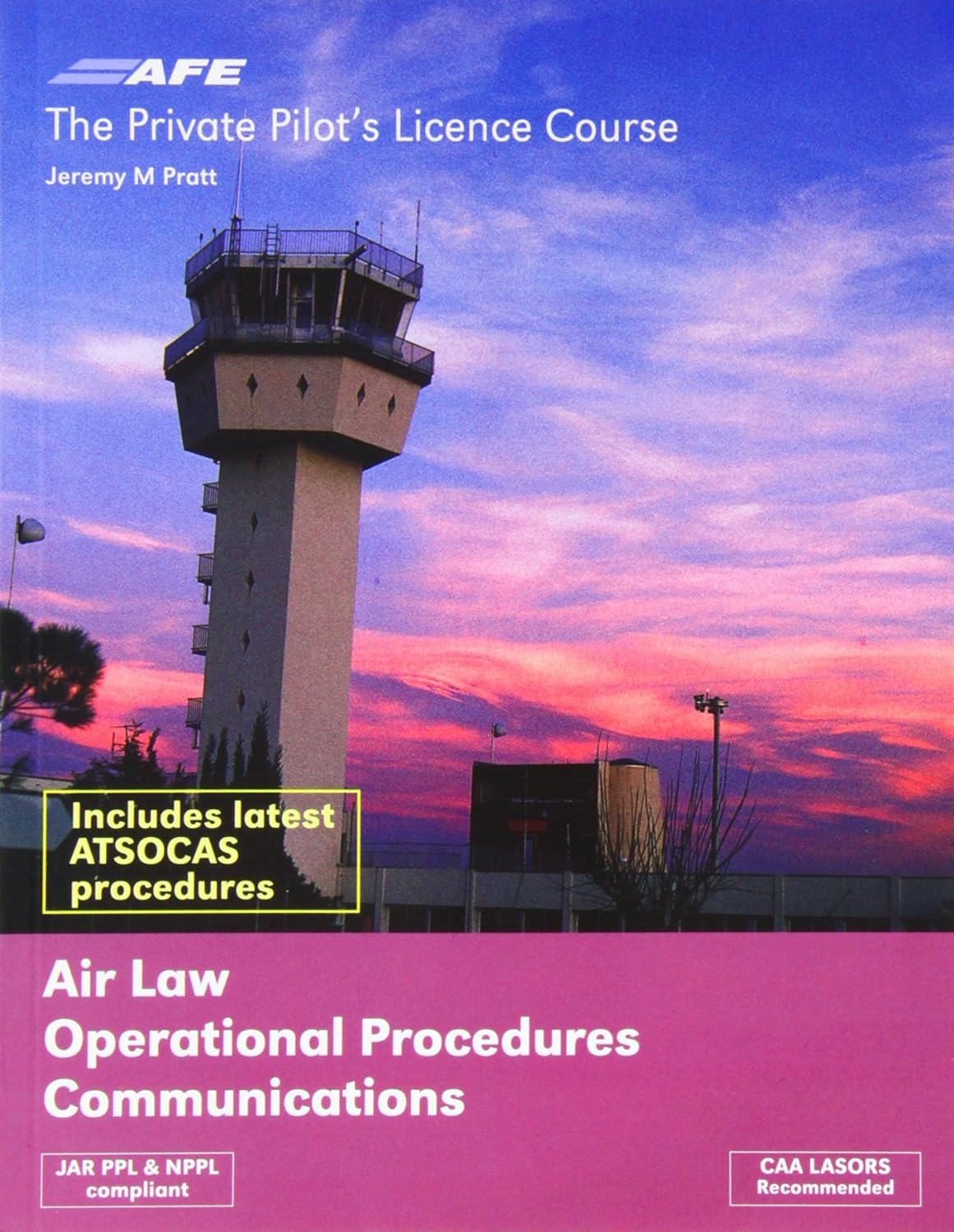
Expect the examiner to quiz you on subjects Air Law & ATC (Operational) Procedures and Communications. All three subjects are summarized in this one (1) book which is a highly recommended read to boost your confidence for the oral quiz.
Air Law, Operational Procedures and Communications (Vol. 2) (PPL Series)
Note: The oral questions will come from this book.
With Fly EPT Spain, at the LESB base, you can choose to fly in a Tecnam P2002-JF or a Tomark VIPER SD4 RTC
The TECNAM P2002-JF is the cheapest plane option in LESB and the AFM / pilot operating handbook (POH), aircraft pilot checklist, along with radio calls and local flight procedures for LESB / Mallorca, can be viewed here.
Budget for half day, to include pre-flight and the de-brief along with some time to complete the necessary paper work which the examiner will assist the candidate with before you send to your chosen licencing authority.
You are free to apply to any EASA country member state of your choosing for the issuance of your new EASA Private Pilot Licence (PPL)
That's it, finished! You have completed the ICAO / FAA / UK CAA PPL to EASA PPL licence conversion process.
If you have any questions, feel free to contact us
How to convert ICAO / FAA / UK CAA PPL to EASA f-ATPL
The conversion process for an ICAO / FAA / UK CAA PPL licence holder, to an EASA frozen ATPL or CPL/IR can be completed via the 'shorter' modular route, as opposed to integrated.
For a f-ATPL, the following credit is given towards the ATPL theory course, allowing you to reduce the self-study hours accordingly, for applicants holding a:
- PPL(A): 650 hours of ATPL theory self-study is required;
- CPL(A): 400 hours;
- IR(A): 500 hours;
- CPL(A) and an IR(A): 250 hours.
Therefore, as an ICAO PPL holder, the candidate will be required to complete an EASA-approved ATPL theoretical knowledge modular course that shall comprise at least 650 hours of instruction.
The ATPL theory course is divided into 3 modules, covering all 13 ATPL subjects.
After passing all 13 ATPL theoretical examinations, ICAO / FAA / UK CAA PPL licence holders will then need to complete an EASA-approved CPL modular flying course for the issue of the Commercial Pilot Licence (CPL). This is a 25-hour flying course which takes around 3 weeks duration full time, followed by a skill test with an EASA flight examiner.
Before commencing the flight training for the EASA CPL modular flying course, PPL pilots must have:
- at least 150 hours total flight time; including 50 hours as PIC on aeroplanes of which 10 hours shall be cross country.
If a multi-engine aeroplane is to be used on the CPL skill test, the candidate shall have complied with the prerequisites for the issue of a class or type rating for multi-engine aeroplanes in accordance with Subpart H. For a multi-engine piston (MEP) aeroplane class rating, the course shall comprise at least 6 hours of flight time.
The CPL modular flying course comprises visual and instrument flying training. Applicants without an IR shall be given 25 hours dual flight instruction, including 10 hours of instrument instruction of which up to 5 hours may be instrument ground time in a BITD, an FNPT 1 or 2, an FTD 2 or an FFS. Applicants holding a valid IR(A) shall be credited towards the dual instrument instruction time, and shall only be given at least 15 hours dual visual flight instruction. At least 5 hours of the flight instruction shall be carried out in a so called 'complex' aeroplane certificated for the carriage of at least 4 persons and have a variable pitch propellor and a retractable landing gear, for e.g. PA28R Piper Arrow
The applicant for a CPL(A) shall have completed at least 200 hours flight time, including at least:
- a Night rating and 100 hours PIC, of which 20 hours of cross country flight as PIC, which shall include a VFR cross country flight of at least 540 KM (300 NM), in the course of which full stop landings at two (2) aerodromes different from the aerodrome of departure shall be made.
Hours as PIC of other categories of aircraft may count towards the 200 hours flight time, in the following cases:
(i) 30 hours in helicopter, if the applicant holds a PPL(H); or
(ii) 100 hours in helicopters, if the applicant holds a CPL(H); or
(iii) 30 hours in TMGs or sailplanes; or (Yes, 30 hours gliding time will count towards the 200 flight hours required for CPL issue)
(iv) 30 hours in airships, if the applicant holds a PPL(As); or
(v) 60 hours in airships, if the applicant holds a CPL(As).
An EASA-approved ELP test with a minimum ICAO level 4, 5 or 6 is required for issue of the Radio-Telephony (TR) license. As well as an EASA class one (1) medical certificate.
This completes the conversion process from an ICAO, FAA or UK CAA PPL to an EASA frozen ATPL or CPL/ME-IR via the modular route.
How to convert ICAO CPL/IR to EASA restricted / frozen-ATPL
For ICAO CPL-MEIR holders wanting to convert to an EASA frozen or restricted ATPL
ICAO CPL/ME-IR licence holders or f-ATPL that have less than 1,500 hours total time, need to formally enrol into an EASA-approved ATPL theoretical ground course with an Approved Training Organization (ATO). After passing all 13 ATPL theoretical examinations, the candidate then needs to complete an EASA conversion course for the Commercial Pilots License (CPL).
Before commencing the training for the EASA CPL/IR modular flying course, the candidate will need to fulfil the usual requirements as outlined above, but 'training as required” applies, which means once the candidate has demonstrated a satisfactory standard to the CFI / HT, the ICAO CPL/IR licence holder can then be put forward for the CPL/ME-IR skill test with an EASA flight examiner.
The ME-IR is a 45-hour training course, however, if the candidate holds an ICAO instrument rating (IR), a 40-hour exemption is given from the EASA ME-IR course, leaving a minimum 15-hour mandatory conversion course before taking the ME-IR skill test.
Convert EASA CPL to UK CAA CPL
Fly EPT Spain ATPL online theoretical ground course is both UK CAA and EASA approved. If you have already completed the ATPL theory course with us, and you want both EASA and UK CAA ATPL licenses, you only need to take both the EASA and UK CAA ATPL exams separately. Once you receive the EASA f-ATPL, the UK CAA flight training is ‘as required’ as described above.
How to convert ICAO ATPL to EASA unrestricted ATPL
For ICAO / FAA / UK CAA ATPL licence holders wanting to convert to an EASA ATPL.
If you have:
- more than 1,500 hours total time; and
- a type rating, with more than 500 hours on type (on a multi-pilot aircraft)
You are still required to pass all 13 EASA ATPL theoretical examinations under the direction of an Approved Training Organization (ATO), but you are NOT required to attend formal ground school. You can go straight to the exams. However, this must be confirmed by Austro Control GmbH.
Email: examinations@austrocontrol.at and CC: piloten@austrocontrol.at
In your email, summarise your experience and attach all supporting documentation.
If Austro Control are satisfied that you meet all the minimum requirements you will receive the following email reply from examinations@austrocontrol.at:
We hereby confirm that you meet the conditions to take an EASA ATPL theory examination based on your ICAO ATPL. You are exempt from the requirement to take an appropriate theory course at an ATO and may proceed directly to the examinations.
Once you receive this email, forward it to: Info@flyEPTspain.com and we will guide you through the next steps of the conversion process.
Candidates wanting to convert ICAO ATPL to EASA ATPL must have an unfrozen ICAO ATPL, i.e. a full ICAO ATPL licence which means the ATPL skill test must be passed on the ICAO ATPL.
Upon passing all 13 EASA ATPL examinations, you may complete the training, as required, in a Level ‘D’ aircraft simulator on which you have more than 500 hours on type. Essentially, you conduct an ATPL skill test / Licence Proficiency Check (LPC) with an EASA Type Rating Examiner (TRE) during your next Licence Proficiency Check (LPC).
Fly EPT Spain can provide ‘online’ access to the European Central Question Bank (ECQB), which is perfectly suited for airline pilots actively flying the line and need a flexible distance learning platform, allowing for home study using an iPad / tablet / PC, which can be completed in their own time, around their own schedule, from anywhere in the world. This we call the ATPL 'short' course
For full details regarding the ATPL 'short' course, select here
To apply to take the EASA ATPL theoretical exams, electronically fill in your details in parts 1 and 2, print the form, and sign part 2 (digitally or by hand)
ATPL (A) Application Form (Conversion)
Email a scanned copy of the signed application form to: Info@flyEPTspain.com
We will arrange for our ATO Head of Training ground school to counter-sign it. You will then need to email the signed form to your chosen exam centre at least 21 days before test date.